

If you’ve tried AI writing tools, you already know the issue: it’s fast… but it doesn’t sound like you. That’s why people keep asking how to use AI for content without sounding fake—because “correct” writing isn’t the same as “human” writing.
Let’s keep it simple. AI should do the heavy lifting (drafts, structure, ideas). You should do the human part (truth, tone, examples, and the final voice).
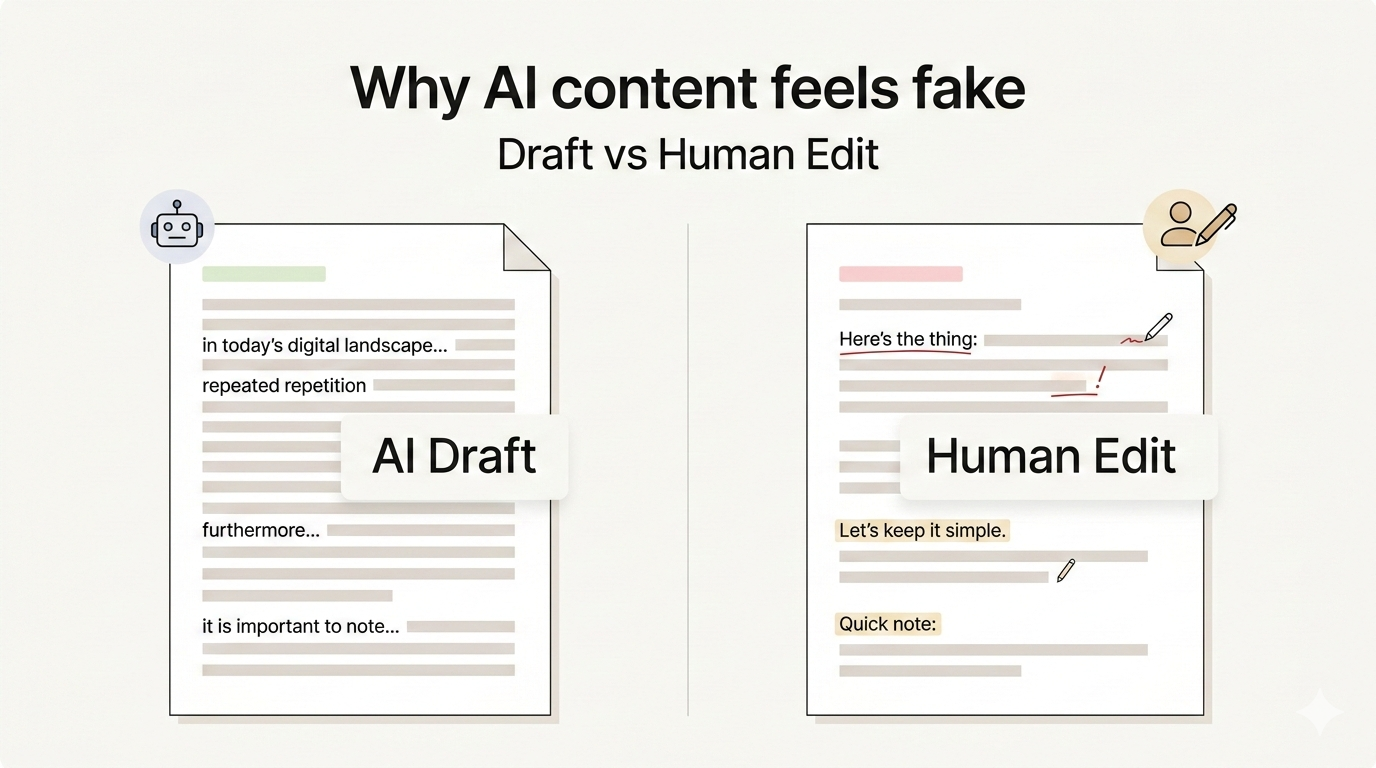
Why AI content feels fake (and why it’s not your fault)
AI often feels fake for 3 reasons:
-
It writes in a “neutral internet voice.”
-
It stays vague (no real examples, no real opinion).
-
It uses filler lines real people don’t say.
So if you copy-paste the first draft, it will feel… off.
The simple 4-step workflow that fixes it
Here’s the workflow I recommend for posts, blogs, ads, and even website copy.
Step 1: Start with a messy “voice note” draft (yes, messy)
Before you open AI, write 5–8 rough lines like you’re texting a friend.
Example (for a digital marketing post):
“People post every day but nothing happens.”
“AI can help, but it can also make you sound like everyone else.”
“The fix is: use AI for structure, then add your real examples.”
That’s enough. Don’t overthink it. Quick note: messy is the point here.
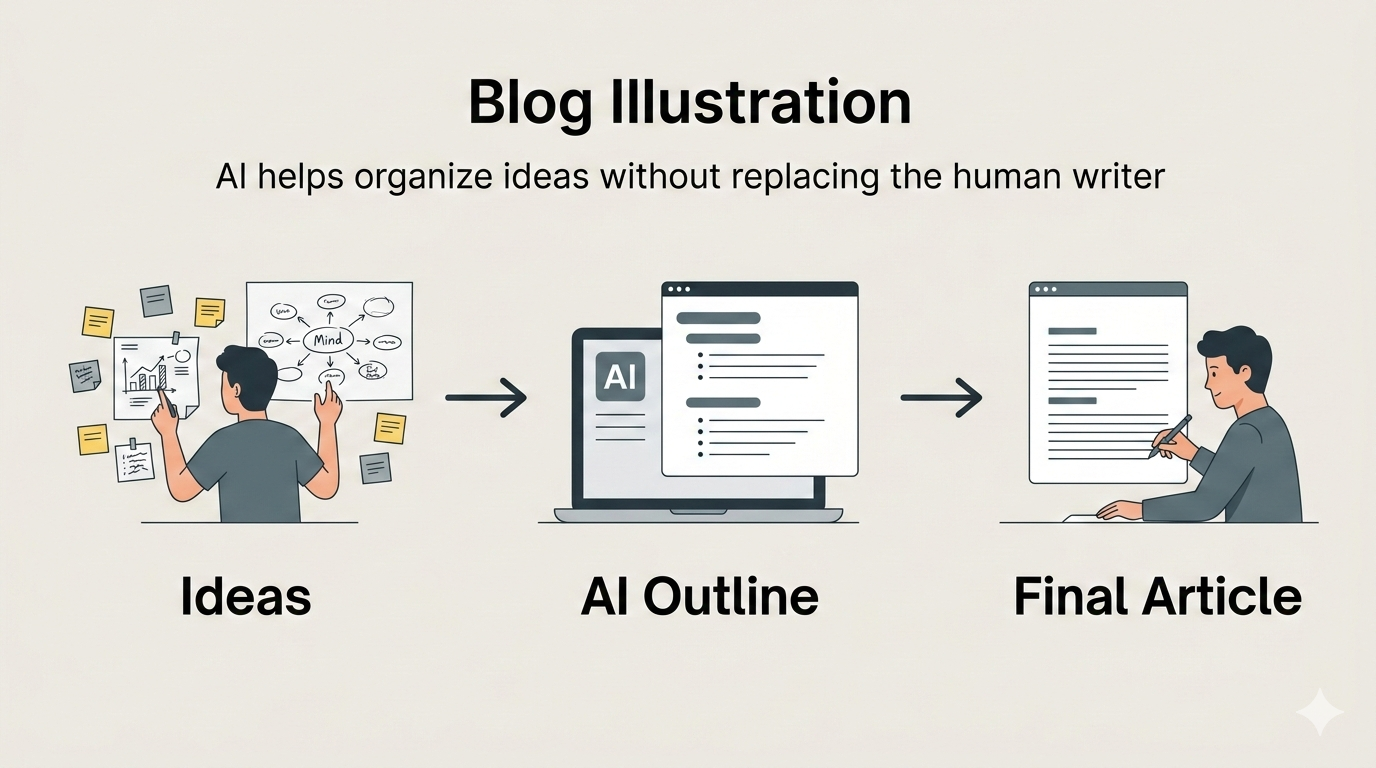
Step 2: Ask AI to structure your ideas (not replace them)
Now paste your rough lines into AI and ask for:
-
a clean outline
-
a first draft
-
3 headline options
This is where AI shines: speed and structure.
If you offer services, you can also use AI to draft clearer service explanations—then rewrite them in your own words so it still sounds like you. (Example internal page: “services”)
See our digital marketing services
Step 3: Do a “real human edit” (this is the whole game)
Here’s the thing: this step matters more than the prompt.
Run this quick filter on every paragraph:
Would I say this out loud to a real person?
If not, rewrite it.
Common AI lines to delete:
“In today’s digital landscape…”
“Leveraging cutting-edge solutions…”
“It is important to note that…”
Swap them for simple lines like:
“Here’s what I’ve noticed…”
“This is the mistake most people make…”
“Try this for 7 days and see what happens.”
Step 4: Add two real examples (so it feels alive)
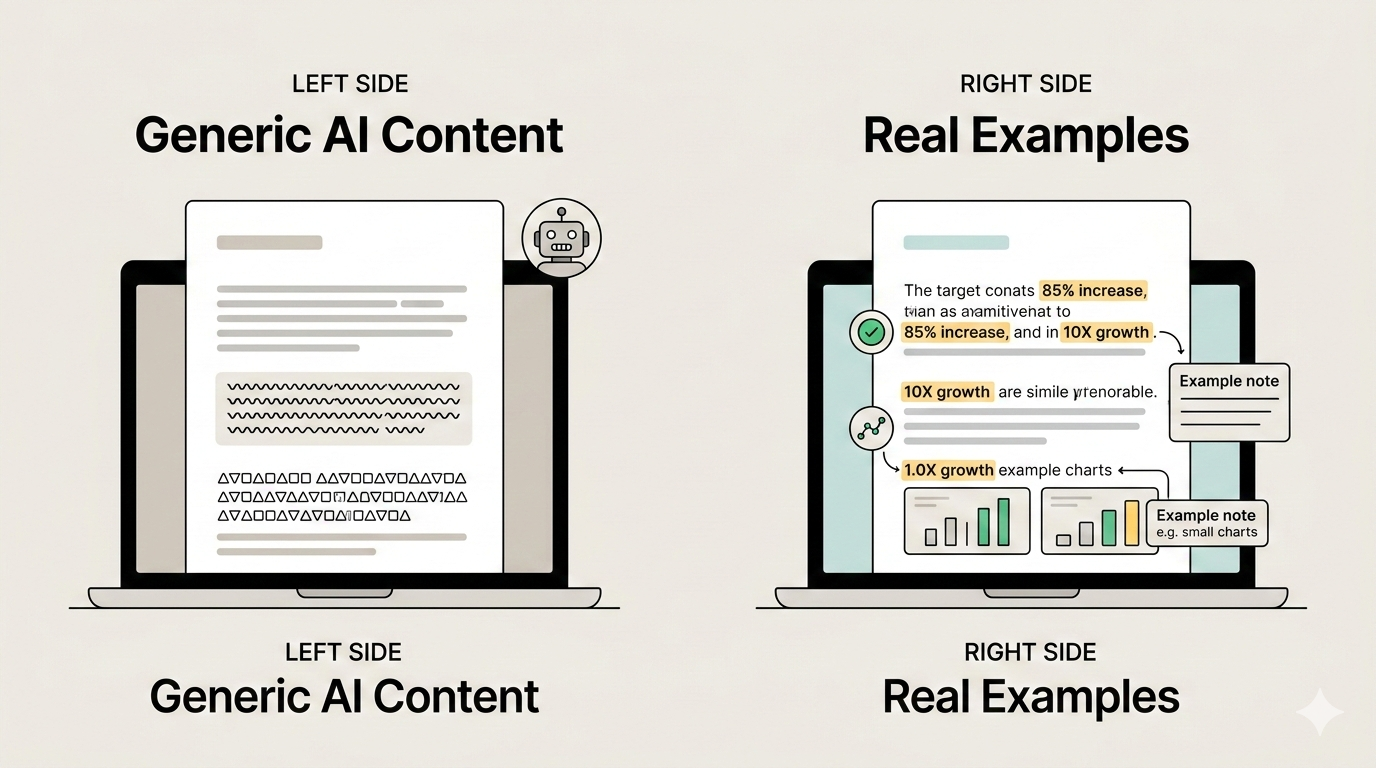
Real examples are what make people trust you.
Example 1 (Caption):
AI draft: “Consistency is key to success.”
Human version: “If you only post when you feel motivated, you’ll disappear for weeks. Pick 3 days. Post even when it’s boring.”
Example 2 (Offer post):
AI draft: “We provide marketing solutions for businesses.”
Human version: “If your ads bring messages but no sales, we’ll find the leak—offer, landing page, or follow-up—and tell you what to fix first.”
One small opinion: I’d rather read a slightly imperfect post with real details than a perfect-sounding post that says nothing.
If you want people to understand who you are, keep your story simple and direct (internal page example: About).
A quick “don’t sound fake” checklist
Use this before posting:
-
Cut 20% of the words (shorter = more human).
-
Add one opinion (“I don’t recommend X because…”).
-
Add one specific detail (time, place, number, scenario).
-
Read it out loud once. Fix anything that feels cringe.
Bonus: Keep AI content aligned with what search engines want
Google’s guidance is basically “people-first.” AI isn’t automatically bad—but copied, thin, or low-value content won’t help. Focus on usefulness and originality.
And from a marketing angle, even HubSpot’s advice on “humanizing” AI content comes back to the same thing: add real insight and authenticity.
Conclusion (simple truth)
AI can help you publish faster. But you make it believable.
If you use this workflow—messy ideas → AI structure → human edit → real examples—you’ll learn how to use AI for content without sounding fake, without spending hours writing from scratch.
Want help turning this into a consistent content system for your brand ?